Oat Milk & Quiet Moments
By Craig Bosward • Clarity Series

European Fashion Cafe Style
English Reflection
The morning arrives in the color of oat milk and warm croissant. You sit at the corner table where light falls in a slow arc across the linen. There is no performance here. Only the small act of turning your cup once in your hands before you sip. The steam curls, and you let it curl. You do not check the hour. You simply notice the way your fingers trace the rim of the porcelain, the way the fabric of your coat settles on the chair like a quiet sentence ending.
You do not wear style. You wear the pause between one breath and the next. The cardigan is slightly off one shoulder not for display but because you shifted to reach the sugar. The scarf is tied loosely because you walked in from a cold street and never thought to re-tie it. That small forgetting is the whole aesthetic. You breathe. You let the espresso go cool by two degrees before you drink. You stand to leave only when the light has changed its angle on the wall. The afternoon was never yours to perform. It was only yours to pass through, slowly.
Deutsche Reflexion
Man setzt sich hin. Langsam. Der Stuhl knarzt leise, und die Stadt draußen verliert ihre Schärfe. Ein Teller Porzellan, ein Glas Wasser, der Duft von frisch gebrühtem Kaffee, der durch die Luft zieht. Man atmet. Nicht tief, nicht bewusst, einfach: ein Atemzug, der bleibt.
Die Jacke hängt locker über der Schulter. Kein Statement, kein Label, nur ein Stoff, der die Form der Bewegung trägt. Die Schuhe sind abgetreten, die Knie gebogen, die Hand ruht auf der Tischplatte. Man spürt die Wärme der Tasse, die Finger umschließen das Porzellan, und für einen Moment ist nichts gefordert.
Nicht modisch sein. Nicht sichtbar sein. Sondern: anwesend. Die Haare fallen über die Stirn, und man schiebt sie beiseite, einmal, dann lässt man sie. Die Tageszeit ändert sich. Das Licht auf der Tischdecke wird länger, goldener. Man trinkt. Man wartet. Nicht auf etwas. Auf niemanden.
Es ist genug, wenn man da ist. Im Rhythmus der Tassen, im Summen der Stimmen, im leisen Klirr eines Untertellers. Europa sitzt hier nicht in der Kleidung. Es sitzt in der Pause zwischen zwei Schlucken.
Réflexion Française
Elle pose sa tasse sur la table, sans hâte. Le café refroidit doucement dans la lumière de l'après-midi, et elle remarque la manière dont le col de son manteau retombe sur une épaule. Pas de geste théâtral. Juste une main qui ajuste un fil, un regard qui glisse du comptoir aux verres suspendus. Elle respire une fois, lentement, et le tissu de sa jupe suit le mouvement. La terrasse sent le bois ciré et la pluie récente. Elle ne se déguise pas. Elle se compose, comme on compose une phrase courte. Un foulard noué deux fois. Des chaussures qu'elle a portées depuis lundi. Le miroir du café lui renvoie une silhouette qu'elle reconnaît sans l'analyser. Elle tourne la page du livre, boit une gorgée, et sort dans la rue avec le bruit discret d'une porte qui se ferme. La ville l'accompagne. Elle marche, et c'est déjà assez.
Riflessione Italiana
Siediti al tavolo di legno vicino alla finestra. La luce entra lenta, dorata, e si posa sulla manica della tua camicia di lino. Non serve che il vestito parli per te. Basta che tu respiri, che le tue mani si fermino un istante sopra il piatto di ceramica bianca, che tu guardi il vapore del caffè salire e sciogliersi nell'aria. La tua postura è un gesto silenzioso: spalle aperte, collo libero, come se il peso della giornata fosse già stato appoggiato altrove, su una sedia accanto alla tua. Non scegli i colori per impressionare. Li scegli per sentirti. Un azzurro spento, un rosa che sa di polvere di petali, un bianco che non grida. Cammina piano verso il bancone. Non di fretta. Lascia che le scarpe tocchino il pavimento senza urgenza. La città fuori dalla vetrina si muove, ma tu sei ferma, e in questa fermata c'è tutta la tua eleganza. Non è il caffè che fa di te una scena. Sei tu che, restando, rendi la scena possibile.
Magyar Elmélkedés
Az a nő, aki a kávézó asztalánál ül, nem öltözik fel, hanem leveti. A sötétzöld kabátja a vállán pihen, a nyaka körében egy vékony sál lazán lóg. Nem a tükre néz, hanem az ablakon átfutó délelőtti fényre. Megállít egy percet: a bögrét a tenyerében tartja, és hallgatja, ahogy a csésze fala melegít. A cipője talpa a parkettára tapad, nem a járdára. Nem kell, hogy kirepüljön a képbe. Egy csug a nyakában csókolja a kulcsot, a hajából egy tő lassan hull a homlokára. Nem mosolyog a kamerának, hanem a párjának, vagy a cseppenként lefolyó kávéfolyamnak. A stílus itt nem szabvány, hanem a tenyér, ami nem feszül. A láb, ami nem siet. A pillanat, amit nem kell rögzíteni, mert már a kezedben van. Ülj le a székbe. Nedd a kezed a bögre szélén. Figyeld a gőzt, ahogy eloszlik a levegőben, ahol senki nem néz, de mindent érezel. Ennyi elég.


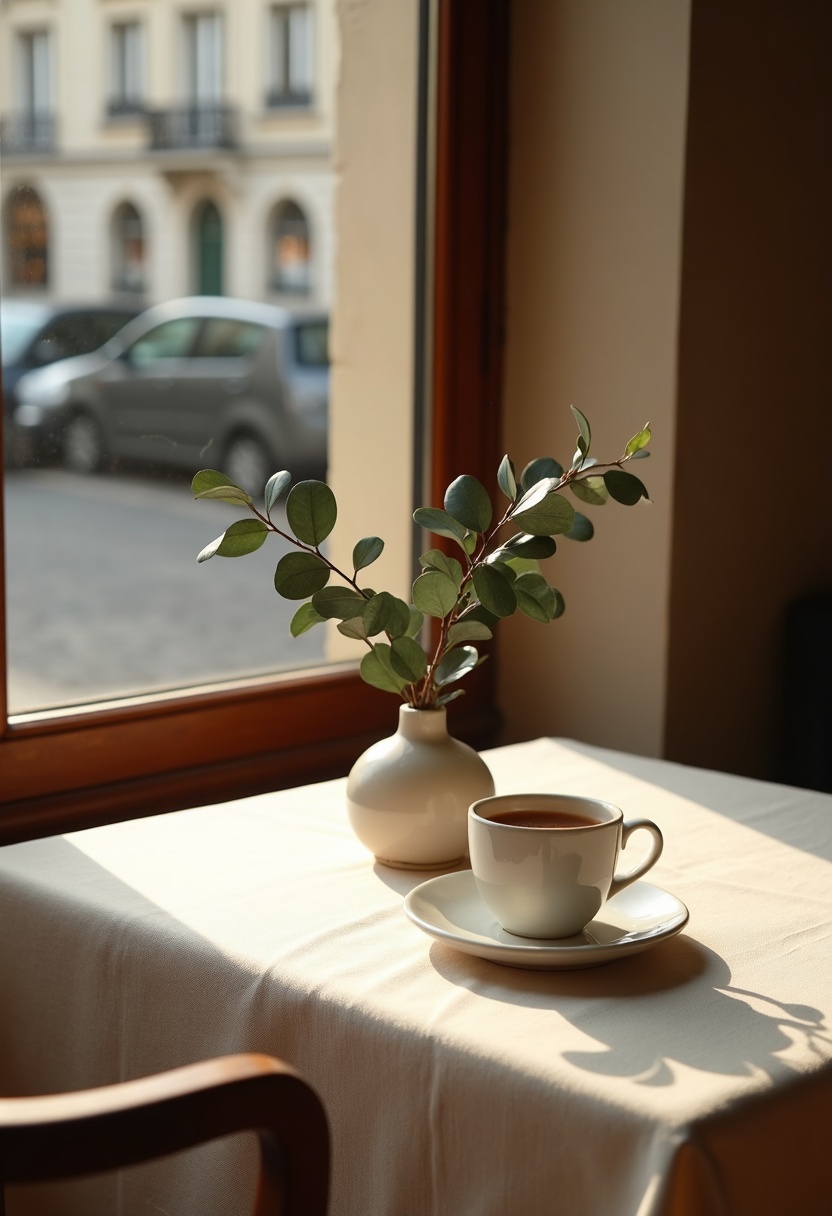
European café style is the quiet art of unperformed presence: a loose scarf, a cool espresso, and the grace of small forgettings.
What does it look like when you stop curating a moment and simply let the steam decide when to drink?
European café fashion is quiet presence: worn-in shoes, a loose jacket, hands warming on porcelain, and the slow pause between two sips of coffee.
What if the most European thing you wear is not a garment, but a moment of stillness?
Le style café européen est une composition quotidienne faite de gestes lents, de tissus portés avec simplicité et d'une présence attentive à la lumière.
Et si la plus belle tenue était simplement celle que l'on met en posant sa tasse sans regarder l'horloge ?
La moda europea da caffè è un gesto di presenza: vestirsi per sé, sedersi con calma, lasciare che la semplicità diventi eleganza.
E se la vera eleganza non fosse nel tessuto, ma nel modo in cui le tue mani toccano il piattino?
European cafe fashion is understated: a soft coat, loose scarf, warm hands on a cup, unhurried presence in natural light.
What happens when the coffee cools and no one is watching? The real style begins there.
Explore More Clarity
Books You Might Like
We use cookies and similar technologies to improve your browsing experience and personalize content. By continuing to use our site, you agree to our use of cookies.